
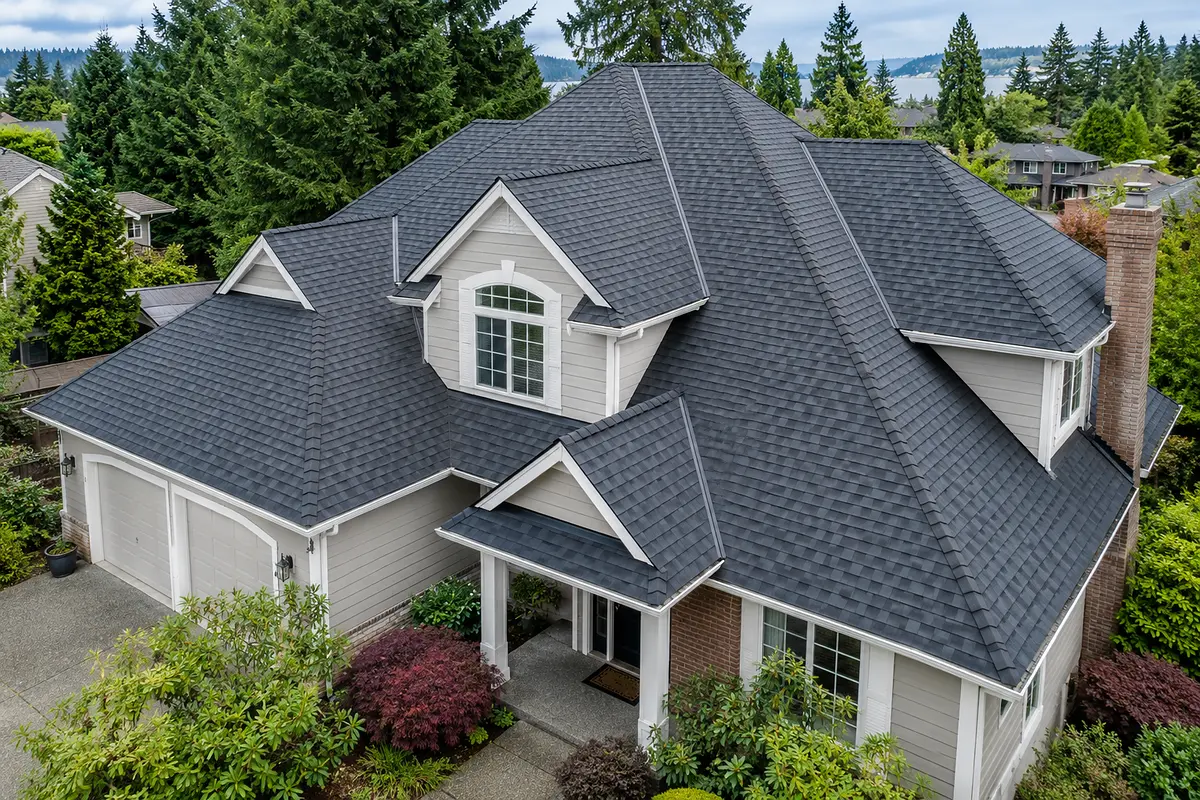
“How much does a new roof cost?” is one of the first questions homeowners ask, and the honest answer is that it depends on the roof. Rather than quoting a number that may not apply to your home, here are the factors that actually drive the price.
Roof size
Roofers measure in “squares” — 100 square feet of roof surface. Roof area is larger than your home’s floor area, because it includes overhangs and the extra surface created by the slope.
Pitch
Steeper roofs take longer to work on and require more safety equipment and staging. A low-slope ranch roof and a steep older home of the same footprint can differ significantly in labor.
Complexity
Every valley, hip, dormer, skylight, chimney, and wall transition adds cutting, flashing, and detail work. A simple gable roof is the most straightforward; a cut-up roof with many planes takes much more time.
Number of layers to remove
Older homes sometimes have two or more layers of roofing. Each extra layer adds tear-off time and disposal weight.
Decking condition
Once the old roof is removed, damaged or rotted sheathing needs to be replaced. Some older homes have spaced board decking that may need new sheathing installed over it before shingles can go on. Because decking can’t be fully evaluated beforehand, estimates often include an allowance or per-sheet price.
Materials
Shingle product lines vary in price, appearance, and features. Underlayment, ice-and-water membrane, ridge products, and flashing metals also affect the total.
Flashing and penetrations
Replacing chimney, wall, and skylight flashing — rather than reusing old metal — adds to the cost but helps reduce leak risk.
Ventilation
If the attic lacks balanced intake and exhaust ventilation, adding vents may be recommended. Ventilation affects attic moisture and can matter for warranty requirements.
Access and site conditions
Tight lots, steep driveways, landscaping, and distance from the roof to where debris containers can be placed all affect labor.
Permits and jurisdiction
Permit needs and fees differ between jurisdictions such as the City of Portland, the City of Vancouver, and surrounding counties.
Timing and weather
In the Pacific Northwest, roofing schedules depend on dry weather. Projects may need to be scheduled around rain to keep the roof protected.
How to get an accurate number
The only reliable price comes from an assessment of your roof and a written scope. When you compare estimates, use our checklist of what a roofing estimate should include so you’re comparing the same work.
Want a price for your roof? Request a roofing estimate.