
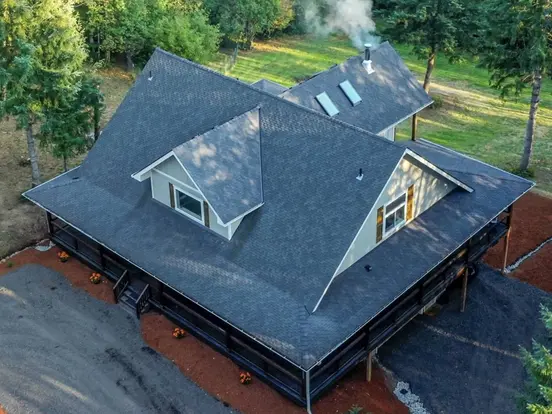
Roof Replacement
Complete tear-off, disposal, decking repair, underlayment, and a new roof installed as one system.
Get $1,000 Off Your Full Roof Replacement + a Free Attic & Ventilation Inspection. Claim offer
Roofing services
Most roof leaks don’t start in the middle of the shingles — they start where the roof meets something else. Chimneys, walls, dormers, skylights, and valleys all depend on flashing to keep water out, and when that metal fails, water finds its way inside.
A chimney needs a layered flashing system, not a bead of caulk. Apron flashing wraps the downhill face. Step flashing is woven in with each course of shingles up the sides. Counterflashing is cut into the mortar joints of the chimney and folds down over the step flashing, so water running down the brick is shed onto the roof. On the uphill side, a cricket diverts water around the chimney.
On many older Portland and Vancouver homes, one or more of those pieces is missing, rusted, or was replaced with tar and sealant that cracks within a few seasons. Chimney leak repair means rebuilding the flashing correctly. The same principles apply where roofs meet sidewalls, dormers, and skylights.
Roof crickets
A cricket — also called a saddle — is a small peaked section of roof built on the uphill side of a chimney. It splits the water and debris flowing down the roof and sends it around the chimney instead of letting it pile up against the back, where most chimney leaks begin.
Building codes generally require a cricket on chimneys wider than 30 inches measured across the slope, but crickets help on smaller chimneys in heavy-rain areas too. We frame, deck, and flash new crickets, and rebuild failing ones, either as a standalone repair or during a roof replacement.
Optional during reroofing
If your chimney no longer vents a fireplace or appliance, removing it during a reroof eliminates one of the most common leak sources on the roof. Learn about chimney removal during roof replacement.
Warning signs
Not sure what you’re looking at? Photos from the ground with a zoom lens or from inside the attic are a safe way to check. Please don’t climb onto a wet or steep roof.
Scope
If the brick or mortar itself is failing, new flashing won’t last. We’ll point that out so a mason can address it.
The roof as a system
L-shaped pieces woven in with each shingle course where the roof meets a chimney or wall.
Metal set into the chimney’s mortar joints that laps over the step flashing to shed water running down the masonry.
A continuous piece along the downhill face of a chimney, or where a roof slope meets a wall above it.
A small peaked structure behind a chimney that diverts water and debris around it.
A small diverter at the bottom of a roof-to-wall joint that sends water into the gutter instead of behind the siding.
Metal or membrane where two roof slopes meet and water flow is concentrated.
Process
Water stains, attic signs, and the roof are checked to find where water is getting in.
You’ll know which flashing pieces are failing and what will be replaced or added.
Shingles around the chimney or wall are removed, and damaged decking is repaired.
Step flashing, counterflashing, aprons, and crickets are installed in the right order.
Underlayment and shingles are woven back in, and the repair is reviewed with you.
Cost factors
Flashing repairs are priced for your specific chimney or wall after the leak is traced.
Where we work
Brick chimneys on Portland’s older homes and wall-to-roof transitions on Clark County two-stories are two of the most common leak sources we see. We repair roof flashing and chimney leaks in Vancouver, Portland, and nearby communities.
FAQ
Heavy or wind-driven rain pushes water past flashing that’s loose, missing pieces, or has failing sealant. Water piling up behind a chimney with no cricket is another common cause.
Usually not for long. Sealant cracks and pulls away as it weathers. Properly layered step flashing and counterflashing shed water without relying on caulk.
Counterflashing is metal set into the chimney’s mortar joints that laps down over the step flashing, so water running down the brick lands on the roof instead of behind the flashing.
Codes generally require one on chimneys wider than 30 inches across the slope, and they help on smaller chimneys too. A cricket keeps water and debris from pooling behind the chimney.
Yes. Flashing can be replaced on an existing roof by removing and reinstalling the shingles around the chimney or wall. If the roof is near the end of its life, it may make sense to do it during a replacement instead.
Roofing estimate
Describe where the water shows up and when it happens, and we’ll follow up about tracing and repairing the leak.

Step 5 of 5 · Optional instant booking
Our team will notify you within 24 hours. You can also book your estimate instantly below.
Loading available times…
Calendar not loading? Open Calendly or call us. Booking confirmation appears here only for bookings completed in this form.
Our team will notify you within 24 hours to arrange your free estimate.
Free & no obligation · Takes about 30 seconds · Licensed, Bonded & insured
Related services
Complete tear-off, disposal, decking repair, underlayment, and a new roof installed as one system.
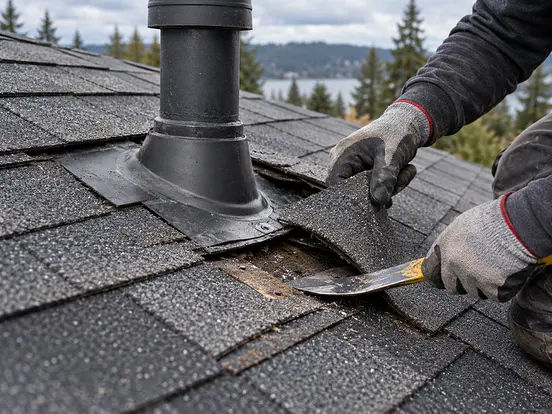
Leak tracing, damaged shingle replacement, localized repairs, and emergency tarping.
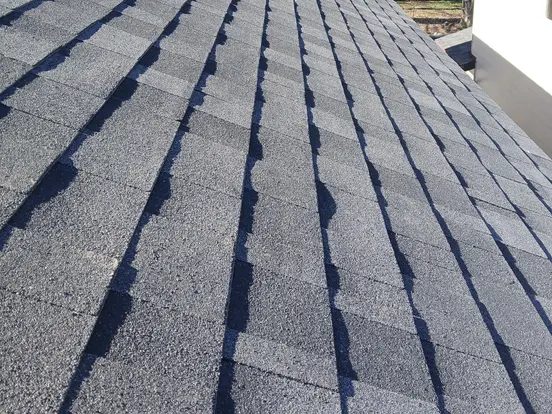
Architectural and designer shingles — including GAF Grand Sequoia — installed for Northwest weather.
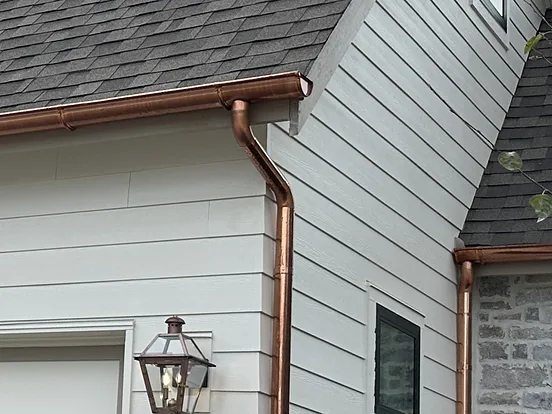
Seamless gutters and downspouts formed to fit your home and sized to carry Northwest rain away.
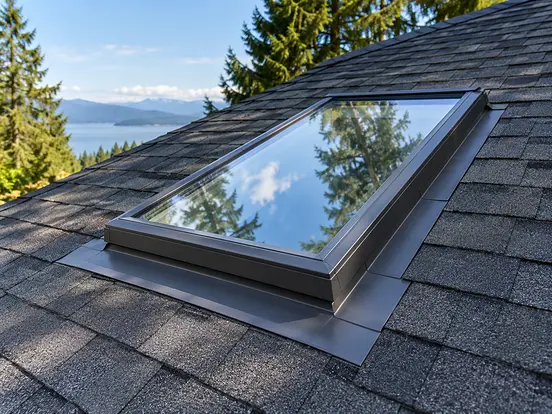
Skylight replacement, reflashing, and leak repair — on its own or during a reroof.
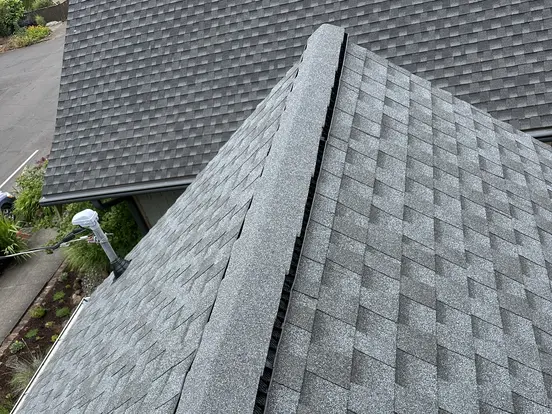
Ridge vents, intake vents, and balanced attic airflow to fight condensation, heat, and moisture.
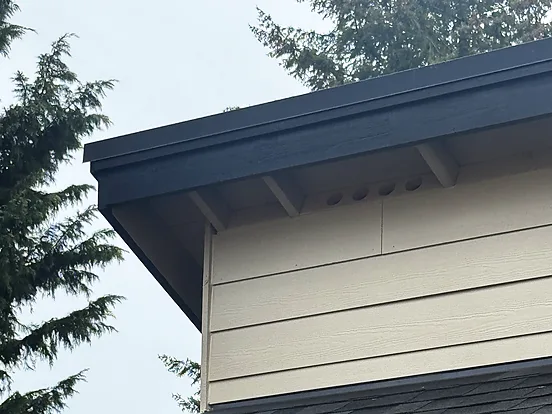
Rotted or damaged fascia and bargeboards replaced so gutters and roof edges have solid backing.

A documented look at your roof’s condition so you can decide between repair, replacement, or waiting.
No-pressure estimates for homes in Vancouver, WA and Portland, OR.