
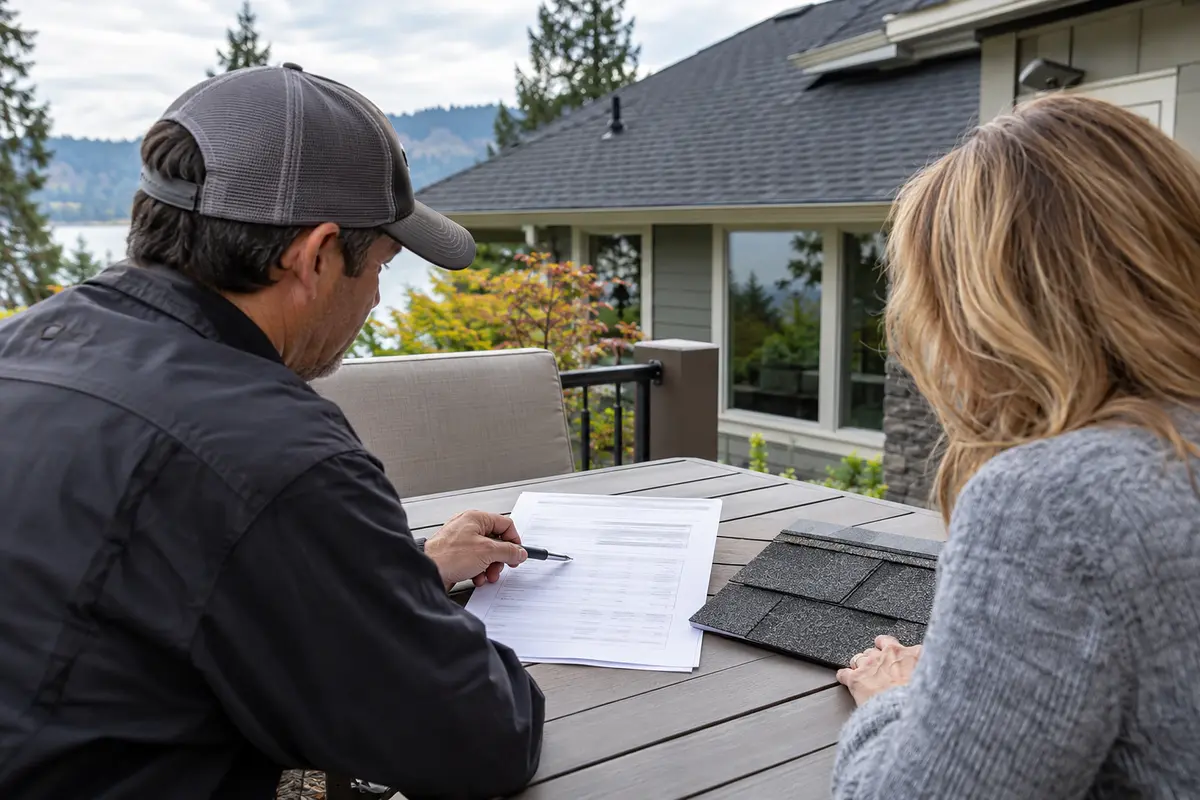
Two roofing estimates can show very different prices for what sounds like the same job. Usually that’s because they describe different work. A clear estimate makes the scope easy to understand and easy to compare. Here’s what to look for.
1. A clear description of the work
The estimate should say whether the job is a repair, an overlay, or a full tear-off and replacement, and which areas of the roof are included. For a replacement, it should state how many existing layers will be removed.
2. How decking is handled
Damaged decking often can’t be seen until the old roof is off. A good estimate explains how replacement sheathing is priced — for example, a set number of sheets included and a per-sheet price for additional ones — so you aren’t surprised later.
3. Underlayment and membranes
Look for the type of underlayment and where any self-adhering ice-and-water membrane will be used, such as in valleys and around penetrations.
4. Flashing details
Flashing is where many leaks start. The estimate should say whether flashing at chimneys, walls, skylights, and valleys will be replaced or reused, and whether new drip edge is included.
5. Vents and penetrations
Pipe boots, exhaust vents, and ridge or other roof vents should be listed. If ventilation changes are recommended, the estimate should explain why.
6. Materials
The manufacturer, product line, and color of the roof covering should be identified, along with ridge and starter products where relevant. This matters for warranty eligibility and for comparing bids fairly.
7. Exclusions
Just as important as what’s included is what isn’t. Common exclusions or optional add-ons include gutters, skylight replacement, fascia, chimney removal, chimney masonry, structural framing, interior repairs, and electrical work. If something isn’t mentioned, ask.
8. Cleanup and property protection
Ask how debris is handled, how landscaping and siding are protected, and how nails are cleaned up afterward.
9. Permits
Ask whether your project needs a permit in your jurisdiction and who is responsible for getting it. Requirements vary between cities and counties in Oregon and Washington.
10. Warranties in writing
There are usually two kinds: the manufacturer warranty on materials and the contractor’s workmanship warranty on installation. Ask for the terms of each in writing, including length, what’s covered, and whether they transfer if you sell.
11. Contractor licensing
Check that the contractor is licensed with the Oregon CCB or registered with Washington L&I, depending on where your home is.
Comparing estimates
Line the estimates up item by item. If one includes full flashing replacement and a decking allowance and another doesn’t mention either, the lower price may simply reflect less work. When in doubt, ask each contractor to explain the difference.
Ready to get started? Request a roofing estimate from Big Bear Exteriors.