
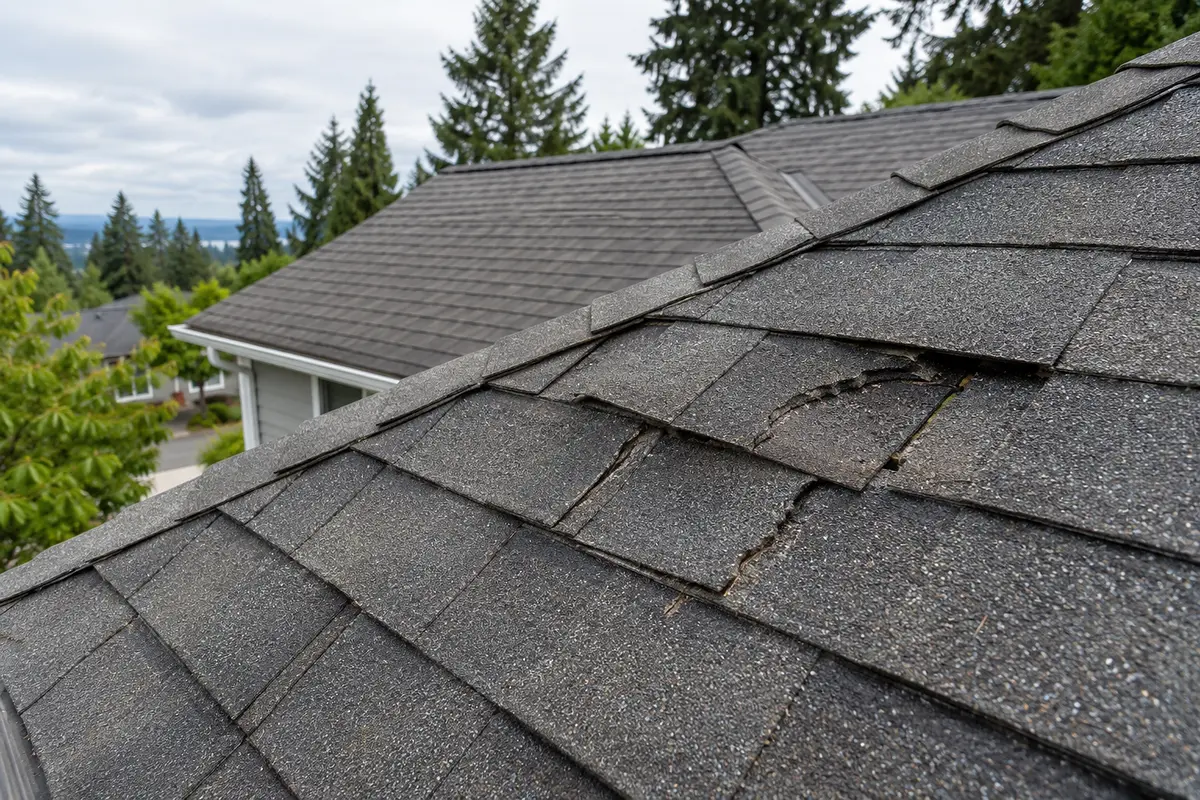
When something goes wrong with a roof, the first question is usually whether it can be fixed or whether it’s time for a new one. There isn’t a single rule, but there is a reliable way to think it through: how widespread is the problem, and how much life does the rest of the roof have left?
When a repair usually makes sense
A repair is often the right call when the problem is isolated and the rest of the roof is in fair condition. Typical examples:
- A leak around a single chimney, skylight, or plumbing vent
- A handful of shingles lifted or torn off in a windstorm
- A cracked rubber pipe boot
- Flashing that has pulled loose at a wall or chimney
- A small area of damage from a fallen branch
In these cases, a focused repair can stop water from getting in and let you get more years out of a roof that is otherwise doing its job. See roof repair for what that work involves.
When replacement is usually the better investment
Replacement starts to make more sense when problems are spread across the roof rather than concentrated in one spot:
- Shingles curling, cracking, or losing granules on most slopes
- Leaks appearing in different places, or returning after repairs
- Soft or sagging areas that suggest damaged decking
- Several past repairs with mismatched patches
- Moss damage that has lifted shingles across large areas
At that point, each repair fixes one symptom while the rest of the roof keeps wearing out. Money spent on repeated repairs may be better put toward a full roof replacement, which also gives a chance to correct hidden issues with decking, flashing, and ventilation.
Questions that help you decide
- How old is the roof, and how has it been maintained? Age alone doesn’t decide it, but an older roof with widespread wear has less to gain from repairs.
- Is the problem in one place or many? One leak at a chimney is different from three leaks on three slopes.
- What condition is the decking in? Soft decking usually can’t be properly fixed with surface repairs.
- How long do you plan to stay? If you’re selling soon, an inspection report and a targeted repair may be enough. If you’re staying for many years, replacement may be the better value.
- Can the repair match the existing roof? Discontinued or weathered shingles may not match perfectly.
Don’t forget the parts you can’t see
A roof is a system: covering, underlayment, decking, flashing, penetrations, ventilation, and drainage. A stain on your ceiling may come from a flashing failure several feet away, from a pipe boot, or from attic condensation rather than a true leak. That’s why the first step for either path is usually a careful roof inspection.
The bottom line
Repair when the damage is limited and the roof has life left. Consider replacement when wear is widespread, leaks keep coming back, or the decking is compromised. Either way, ask for a clear written scope so you can compare options on equal terms.